
The Quiet Science of Alpha Arbutin
Why gentle brightening actives outperform harsh alternatives — especially on melanin-rich skin.
Dear Skin Editorial · September 9, 2026
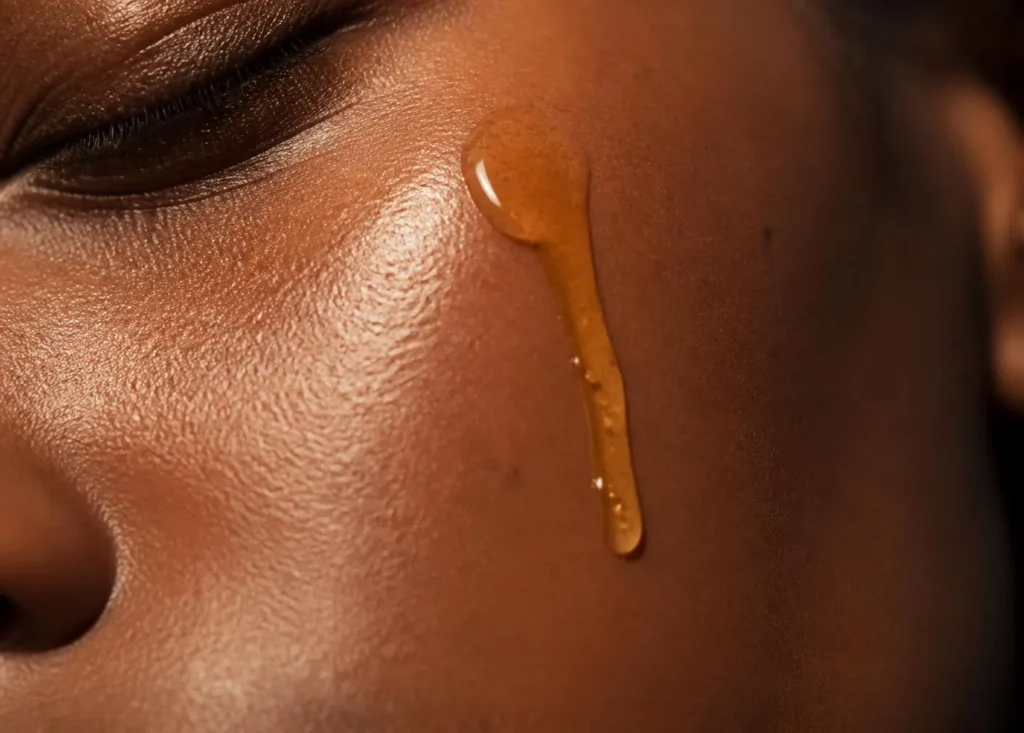
Melanin-rich skin is not more fragile — it is more responsive. Every blemish, every shaving bump, every moment of friction is recorded by pigment cells that are simply doing their job a little too enthusiastically. That is why the loudest, strongest brightening ingredient is rarely the right one.
Alpha arbutin works differently. Rather than stripping pigment away, it interrupts the conversation between your skin and the enzyme that produces it.
Tyrosinase is the enzyme responsible for converting amino acids into melanin. Alpha arbutin binds to it gently and reversibly, slowing overproduction without shutting the system down. The result is a fading of excess pigment while your natural, beautiful baseline tone stays exactly where it belongs.
Because the action is measured, alpha arbutin rarely triggers the rebound irritation that harsher agents can cause — and irritation, on melanin-rich skin, is simply another route to a dark mark.
Apply to clean, slightly damp skin before your heavier creams and oils. Consistency beats concentration: eight weeks of nightly use will always outperform a fortnight of aggressive treatment.
Pair it with daily sun protection. Without SPF you are refilling the bath while the tap runs.
Weeks one to three: skin looks calmer and more even in tone overall. Weeks four to eight: individual marks begin to soften at the edges. Beyond twelve weeks: the deeper, older pigmentation lifts.
This is slow work. It is also the work that lasts.


